Tour Price

$ 2,600

Prices are based on two adults sharing. Solo travelers and private groups, please contact us for a personalized quote.

8 Days Hiking Kilimanjaro Lemosho Route

Trip Info

Duration

8 days

Max Pax

30

Min Age

5+

Tour Type

Accomodation
Camping in Mountain Tents
Airport Pickup
Kilimanjaro Int. Airport (KIA)

Overview

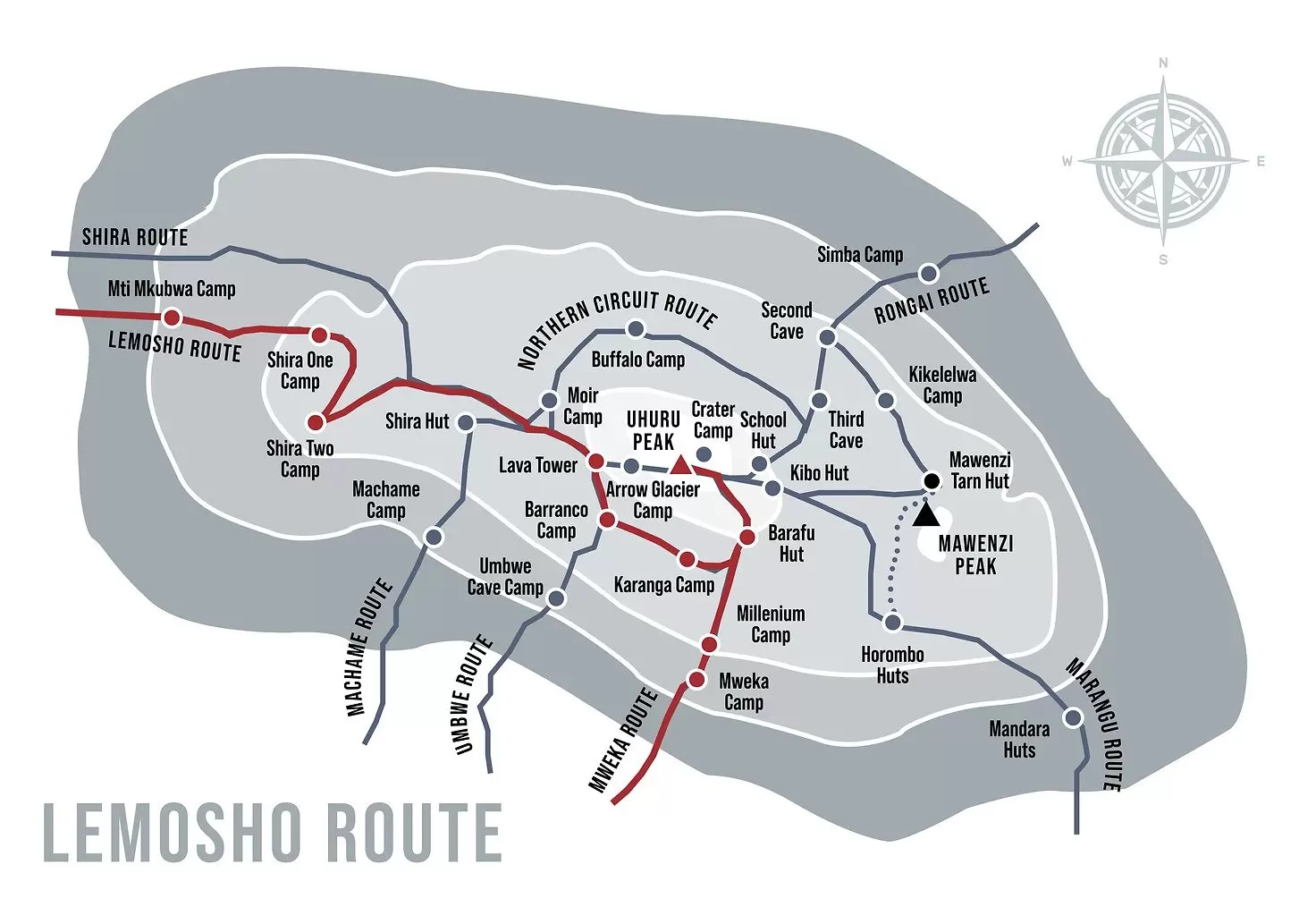
The Lemosho route is a popular and scenic trail that offers stunning views, excellent acclimatization, and high summit success rates. Starting on the western slope of Kilimanjaro, it provides a quieter, less crowded approach compared to other routes. The trek passes through diverse landscapes, from lush rainforests to alpine deserts, offering trekkers the chance to experience the mountain’s varied ecosystems. The route is available in 7- and 8-day itineraries, with the 8-day option recommended for better acclimatization.

A key highlight of Lemosho is Cathedral Peak (3,872 m), one of the highest points of the Shira Volcano, where climbers can enjoy an acclimatization hike and take in spectacular views of the surrounding areas. Another iconic feature of the route is the Dendrosenecio kilimanjari, an alien-like plant species found only on Kilimanjaro. With its great acclimatization profile and breathtaking landscapes, the Lemosho route offers an unforgettable Kilimanjaro experience.
Destinations:
Kilimanjaro National Parks

Itinerary Highligts

Day 1: Londorossi Gate - Forest Camp

Day 2: Forest Camp - Shira 1 Camp

Day 3: Shira 1 Camp - Moir Hut

Day 4: Moir Hut - Barranco Camp Via Lava Tower

Day 5: Barranco Camp - Karanga Camp

Day 6: Karanga Camp - Barafu Camp

Day 7: Barafu Camp - Uhuru Peak - Mweka Camp

Day 8: Mweka Camp - Mweka Gate

Full Itinerary

Day 1: Londorossi Gate - Forest Camp

We depart Moshi for Londorossi Gate, which takes about 3 to 4 hours, where you will complete entry formalities. Then drive to the Lemosho trailhead (another hour to reach the trail head). Upon arrival at trail head, we eat lunch, then commence through undisturbed forest which winds to the first camp site.

  • Transport: 4 hours, 80 km
  • Hiking time: 3 – 4 hours (6 km)
  • Ascent: 535 m
  • altitude: 2895 m
  • Accommodation: Camping
  • Meals included: Breakfast / Lunch / Dinner

Day 2: Forest Camp - Shira 1 Camp

Our journey continues eastwards across the Shira Plateau with spectacular views of Shira Cathedral. We cross moorland meadow to reach Shira 1 Camp for dinner and overnight camping at 3500m. By now we will be able to see the stunning glaciers of the Western Breach. It will be colder tonight than the previous night with temperatures possibly falling below freezing.

  • Hiking time: 5 – 6 hours (8 km)
  • Ascent: 605 m
  • altitude: 3500 m
  • Accommodation: Camping
  • Meals included: Breakfast / Lunch / Dinner

Day 3: Shira 1 Camp - Moir Hut

We leave the forest behind now and the trail gets steeper as it enters the moorland zone. A gentle grade walk takes you across the high altitude Shira Caldera to Moir Hut with fabulous views of Arrow glacier. We will camp here for the night at 4200m.

  • Hiking time: 6 – 7 hours (11 km)
  • Ascent: 700 m
  • altitude: 4200 m
  • Accommodation: Camping
  • Meals included: Breakfast / Lunch / Dinner

Day 4: Moir Hut - Barranco Camp Via Lava Tower

We begin the day climbing up a ridge and then head southeast towards the Lava Tower up to 4600m – a 300 ft. tall volcanic rock formation for lunch and acclimatization. This will be our toughest day so far and you may, for the first time, feel the altitude. After lunch we will descend again by almost 650m to Barranco Camp, following the “walk high, sleep low” golden rule of acclimatization. Our descent to Barranco Camp takes about 2 hours and offers great opportunities to take some beautiful photographs of the Western Breach and Breach Wall. The camp is situated in a valley below the Breach and Great Barranco Wall.

  • Hiking time: 6 – 7 hours (10 km)
  • Ascent: 400 m
  • Descent: 650 m
  • altitude: 4600 m
  • Accommodation: Camping
  • Meals included: Breakfast / Lunch / Dinner

Day 5: Barranco Camp - Karanga Camp

A short, but fun, day starting with a scramble to the top of the Great Barranco Wall. We then traverse over scree to the Karanga Valley (3930m) beneath the icefalls of the Heim, Kersten and Decken Glaciers. We will stay overnight at Karanga campsite. This is a shorter day meant for acclimatization.

  • Hiking time: 4 – 5 hours (5 km)
  • Ascent: 260 m
  • Descent: 280 m
  • altitude: 4210 m
  • Accommodation: Camping
  • Meals included: Breakfast / Lunch / Dinner

Day 6: Karanga Camp - Barafu Camp

We leave Karanga and hit the junction which connects with the Mweka Trail. We continue up to the rocky section to Barafu Hut. At this point, you have completed the Southern Circuit, which offers views of the summit from many different angles. Here we make camp, rest and enjoy an early dinner to prepare for the summit day. The two peaks of Mawenzi and Kibo are viewable from this position.

  • Hiking time: 3 – 4 hours (4 km)
  • Ascent: 670 m
  • altitude: 4700 m
  • Accommodation: Camping
  • Meals included: Breakfast / Lunch / Dinner

Day 7: Barafu Camp - Uhuru Peak - Mweka Camp

Very early in the morning (around midnight), we begin our push to the summit. This is the most mentally and physically challenging portion of the trek. The wind and cold at this elevation and time of day can be extreme. We ascend in the darkness for several hours while taking frequent, but short, breaks. Near Stella Point (18,900 ft.), you will be rewarded with the most magnificent sunrise you are ever likely to see coming over Mawenzi Peak. Finally, we arrive at Uhuru Peak- the highest point on Mount Kilimanjaro and the continent of Africa.

From the summit, we now make our descent continuing straight down to the Mweka Hut camp site, stopping at Barafu for lunch. The trail is very rocky and can be quite hard on the knees; trekking poles are helpful. Mweka Camp is situated in the upper forest and mist, or rain can be expected in the late afternoon. Later in the evening, we enjoy our last dinner on the mountain and a well-earned sleep.

  • Hiking time: 12 – 14 hours (17 km)
  • Ascent: 1295 m
  • Descent: 2795 m
  • altitude: 5895 m
  • Accommodation: Parkview Inn
  • Meals included: Breakfast / Lunch / Dinner

Day 8: Mweka Camp - Mweka Gate

On our last day, we continue the descent to Mweka Gate and collect the summit certificates. At lower elevations, it can be wet and muddy. From the gate, we continue another hour to Mweka Village. A vehicle will meet us at Mweka Village to drive us back to the hotel in Moshi.

  • Transport: Private transfer (0.5 hours, 17 km)
  • Hiking time: 3 – 4 hours (10 km)
  • Descent: 1300 m
  • altitude: 3100 m
  • Accommodation: Hotel
  • Meals included: Breakfast / Lunch

Departure

You will be picked up from the hotel and be transferred to the airport to catch up your flight back home.

  • Meals: Breakfast

Note: Hotel check-out is at 10:00 AM. In case you need a late check-out because of an evening flight, you have the option to extend your hotel stay till 6:00 PM for an extra fee.

Good To Know

Climbing Mount Kilimanjaro is an adventure open to anyone with determination and a reasonable level of fitness, regardless of prior mountaineering experience. From seasoned trekkers seeking their next challenge to first-time climbers eager to push their limits, this journey welcomes adventurers from all walks of life. With various routes tailored to different skill levels and timeframes, Kilimanjaro offers something for everyone, whether you’re an experienced hiker or a beginner. The key to success lies in proper preparation, including physical training, mental resilience, and acclimatization to altitude. Families, solo travelers, and even groups celebrating milestones often embark on this life-changing journey, supported by expert guides who ensure safety and an unforgettable experience.

Includes

  • Kilimanjaro trekking according to the itinerary
  • Professional, English-speaking guide
  • Mountain crew (cook, summit porter& porters)
  • Overnight stays in tents
  • Camping equipment (tents, sleeping mats, tables, chairs )
  • Meals according to the itinerary
  • Drinking water, tea & coffee
  • Oxygen tank and oximeters
  • All national park fees
  • Transfer from the hotel to the National Park gate and back

Excludes

  • International or Local Flights
  • Optional activities
  • Alcoholic and soft drinks
  • Visa fees
  • Tips
  • Personal spending money for souvenirs etc.
  • Travel insurance

Most Frequently Asked Questions

What are the main routes to climb Mount Kilimanjaro?

There are seven main routes to climb Mount Kilimanjaro: Marangu, Machame, Lemosho, Shira, Rongai, Northern Circuit, and Umbwe. Each route varies in difficulty, scenery, and duration. The Marangu Route is known as the "Coca-Cola" route and is the only one offering hut accommodations, while the Machame Route, also called the "Whiskey" route, is popular for its diverse and scenic paths. The Lemosho and Shira routes offer beautiful vistas and lower traffic, making them ideal for those seeking a more solitary experience. Rongai is the only route starting from the north, and the Northern Circuit is the longest route, offering the most acclimatization time. Umbwe is the steepest and most challenging route, recommended for experienced climbers.

How long does it take to climb Mount Kilimanjaro?

The duration of the climb depends on the route chosen. Typically, it takes between 5 to 10 days to reach the summit and descend. For instance, the Marangu Route can be completed in 5-6 days, while the Lemosho Route generally takes 7-8 days. The Northern Circuit, being the longest, can take 9-10 days. Additional acclimatization days can improve summit success rates and overall experience.

What is the best time of year to climb Kilimanjaro?

The best times to climb Mount Kilimanjaro are during the dry seasons: from January to early March and from June to October. These periods offer the best weather conditions, with less rain and clearer skies. Climbing during the wet seasons, from April to May and November to December, can be more challenging due to muddy trails and poor visibility.

Do I need technical climbing skills to climb Kilimanjaro?

No technical climbing skills are required to climb Kilimanjaro. It is a non-technical trek, meaning no ropes or special equipment are needed. However, it is a physically demanding hike due to the high altitude and varying terrain. Good physical fitness and proper acclimatization are essential for a successful climb.

What are the accommodation options on Mount Kilimanjaro?

Accommodations on Kilimanjaro vary by route. The Marangu Route offers hut accommodations with basic facilities such as beds, mattresses, and communal dining areas. Other routes, such as Machame, Lemosho, and Rongai, require camping in tents. Porters carry the camping equipment and set up the tents at designated campsites.

How do I prepare physically for a Kilimanjaro climb?

Physical preparation is crucial for a successful Kilimanjaro climb. It is recommended to start training at least 2-3 months before the climb. Focus on aerobic exercises such as hiking, running, and cycling to build endurance. Strength training for legs, core, and upper body will also be beneficial. Practice hiking with a backpack to simulate the conditions on the mountain.

What should I pack for a Kilimanjaro climb?

Packing for Kilimanjaro requires careful consideration of the weather and terrain. Essential items include sturdy hiking boots, warm clothing (layers), a good quality sleeping bag, a backpack, trekking poles, and a headlamp. Other important items are sun protection, a first aid kit, hydration systems, and high-energy snacks. A detailed packing list is usually provided by tour operators.

Is altitude sickness common on Kilimanjaro?

Yes, altitude sickness is common on Kilimanjaro due to the rapid ascent to high altitudes. Symptoms can include headaches, nausea, dizziness, and fatigue. Proper acclimatization, such as following the "pole pole" (slowly, slowly) approach, staying hydrated, and taking acclimatization days, can help mitigate the effects. Some climbers may also take medication like Diamox to prevent altitude sickness.

Do I need a guide to climb Kilimanjaro?

Yes, it is mandatory to climb Kilimanjaro with a licensed guide and porters. The Tanzanian government requires all climbers to be accompanied by a registered tour operator. Guides are experienced in navigation, first aid, and handling altitude-related issues, ensuring the safety and success of your climb.

How much does it cost to climb Mount Kilimanjaro?

The cost of climbing Kilimanjaro can vary widely depending on the route, duration, and tour operator. On average, expect to pay between $1,500 and $4,000 per person. This cost typically includes park fees, guide and porter fees, food, and accommodations. Additional expenses may include flights, gear, tips, and personal expenses.

What is the success rate for reaching the summit?

Summit success rates vary by route and individual preparation. On average, the overall success rate for reaching the summit is around 65-75%. Routes that allow for more acclimatization days, such as Lemosho and Northern Circuit, generally have higher success rates, often exceeding 85%.

What kind of food is provided on the climb?

The food provided on Kilimanjaro is typically high in carbohydrates and calories to meet the energy demands of the climb. Meals often include porridge, bread, fruits, vegetables, pasta, rice, and meat. Vegetarian and special dietary requirements can usually be accommodated with prior notice. Hydration is also crucial, and climbers are encouraged to drink plenty of water and hot beverages like tea.

Book This Tour

Related trips you might interested in

You are welcome to tailor our trip options to your own interests. While these carefully chosen ideas will serve as a starting point, keep in mind that your path will be entirely unique to you.

Login

Ut enim ad minim veniam, quis nostrud exercitation ullamco laboris nisi ut aliquip ex ea commodo consequat. Duis aute irure dolor in reprehenderit in

Address

184 Mayfield St. Hopewell
Junction, NY 12533

Phone

Email